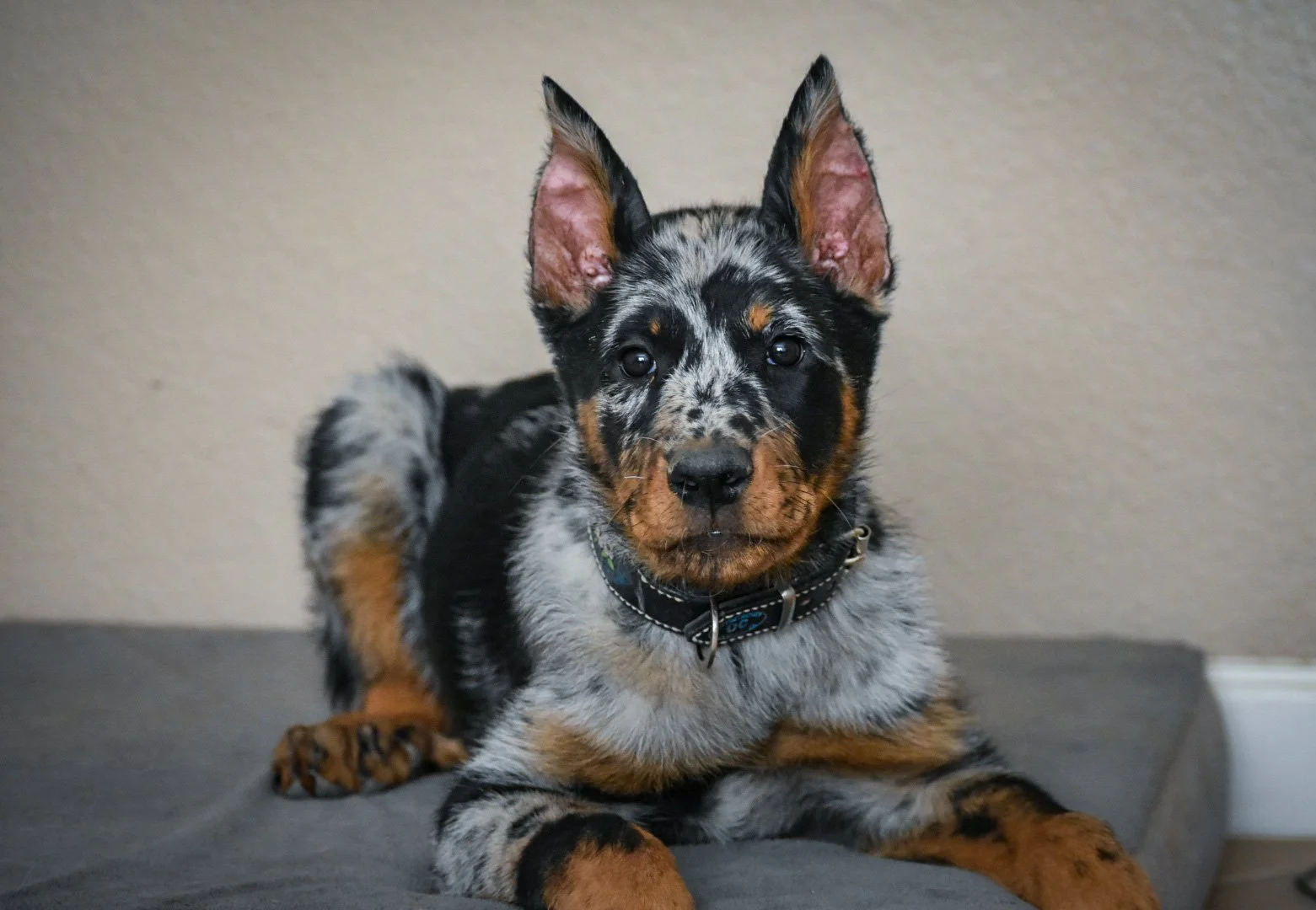
Puppy Raising At Clairvaux Noir
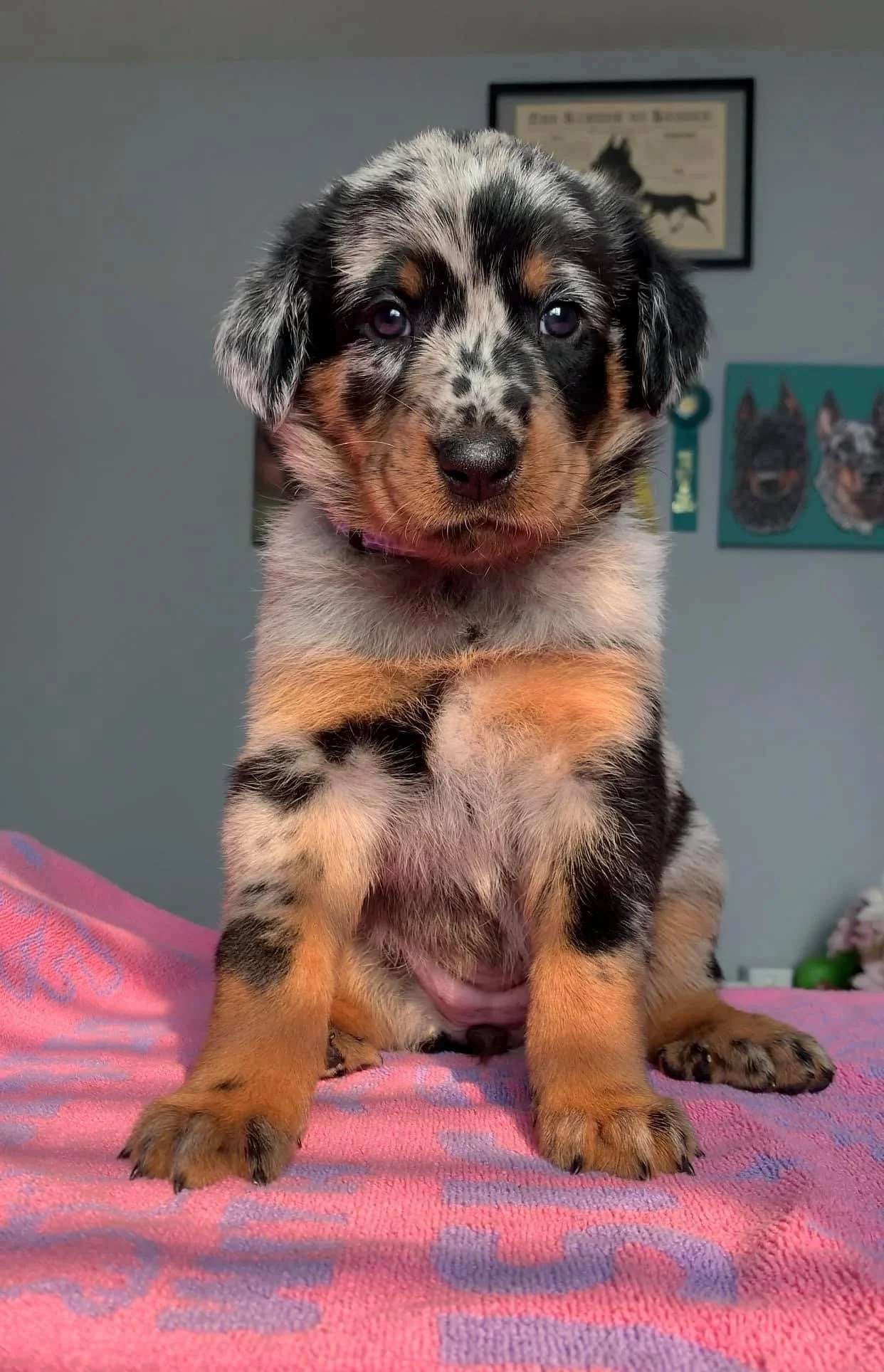
At Clairvaux Noir, our puppies are raised in our home using a structured puppy development program designed to produce confident, well-socialized, and environmentally stable dogs. From birth through placement, each puppy participates in carefully planned enrichment and socialization experiences that support future success as a working dog, sport prospect, or active family companion.
Our goal is to raise healthy, well-rounded puppies with stable temperaments, strong nerves, and a willingness to engage with their handlers. Whether a puppy is destined for dog sports, protection sports, working roles, outdoor adventures, or an active companion home, we strive to provide the foundation necessary for lifelong success.
By focusing on early socialization, environmental enrichment, confidence building, and positive exposure, Clairvaux Noir puppies leave our program prepared to transition successfully into their new homes and continue developing into capable, reliable adult dogs.
Puppy raising protocol
Days 0–3 | Neonatal Period
The first three days are dedicated to bonding between dam and puppies. Human interaction is kept minimal and intentional, limited to whelping pen maintenance and brief handling throughout the day to acclimate puppies to my scent and presence.
Days 3–17 | Early Neurological Stimulation (ENS)
Also known as the Bio Sensor program, ENS is designed to promote neurological development and build a foundation for resilience and adaptability in adulthood. Each puppy is handled individually, once per day, and taken through a series of five exercises in sequence before moving to the next littermate.
The five exercises, performed in order, are:
1. Tactile stimulation (between the toes)
2. Head held erect
3. Head pointed downward
4. Supine position
5. Thermal stimulation
Days 3–17 | Early Scent Introduction (ESI)
ESI is conducted in conjunction with ENS. Each day, puppies are briefly exposed to a novel scent. Research supports that early olfactory stimulation significantly enhances scenting ability later in life. Scents used in our program include: orange peel, lemon peel, grass, sticks, herbs, lavender, leaves, training toys, and hay. Food scents are intentionally excluded from our protocol — our priority from the very beginning is activating the nose, not the stomach.
Day 10 | Sound, Surface & Environmental Enrichment
As puppies’ ears open, the scope of environmental exposure expands significantly across three areas:
Sound Desensitization: Puppies are exposed to a continuous rotation of real-world sounds throughout the day to build sound confidence and reduce the likelihood of noise sensitivity in adulthood. Sound exposure includes: thunderstorms, fireworks, children, lawnmowers, leaf blowers, hair dryers, dogs, cats, farm animals, joggers, doorbells, ocean waves, construction noise, gunfire, and crowd noise.
Novel Surfaces: New surfaces exposing puppies to a variety of textures and footing to build confidence and body awareness early.
Environmental Enrichment: Environmental stimulation runs throughout the day. Puppies are given ample opportunity to explore, problem-solve, and play within their enriched environment.
Weeks 3–8 | Socialization, Enrichment & Drive Development
Week 3
Puppies are moved from the whelping room into the main living area of the home, where they have access to a larger pen and a rotating variety of enrichment equipment (tunnels, foam steps, shaker cans, tents, and interactive obstacles). Litter box training is introduced at this stage.
Socialization begins in earnest. Puppies are introduced to a wide range of people, including children. We place particular focus on the startle reflex, teaching puppies to encounter the unexpected and recover naturally, laying the groundwork for a stable, confident adult.
Puppy obstacle courses are also introduced at week 3, with an emphasis on nose activation and problem-solving. We want puppies leading with their nose from the very beginning, learning to search, explore, and work through challenges with confidence.
Weeks 4–8
Socialization continues in a controlled, deliberate manner. Puppies are exposed to stable adult dogs who will give fair corrections and are considered an important part of their social education. Additional exposures include small and large dogs, horses, chickens, and varied human interactions across age groups.
Week 5
Individual drive assessment begins, evaluating food drive, prey drive, hunt drive, pack drive and toy drive in each puppy. Puppies also begin attending outings at our sport club, where they are exposed to a working dog environment and the sights, sounds, and activity that come with it, an invaluable early experience for puppies destined for sport or working homes.
Week 6
Puppy-to-owner matching process starts and is always one of the most rewarding milestones of the process. Every litter will be evaluated on livestock, by a detection instructor, and decoy.
Week 8 - 10
Natural eared puppies depart for their forever homes (cropped puppies will depend on when healing is completed).