
Beaucerons & Herding
Before the Beauceron was seen in sport rings, obedience fields, or protection trials, it was a true working farm dog—developed in France for one primary purpose: to move, manage, and protect livestock over vast rural landscapes.
Understanding the Beauceron’s role in herding and tending is essential to understanding the breed itself. Modern titles and sports are simply structured ways of measuring instincts that have existed in the breed for centuries.
The Origin of the Beauceron as a Herding Dog
The Beauceron, also known as the Berger de Beauce, originated in France as a dual-purpose livestock dog. Unlike highly specialized herding breeds developed for either “eye” work or close-quarters gathering, the Beauceron was bred to perform large-scale tending work across open land.
Historically, Beaucerons were used to:
Drive and move large herds of sheep and cattle across long distances
Guard livestock from predators and theft
Work independently without constant human direction
Assist farmers in managing multiple tasks throughout the day
This required a dog with exceptional intelligence, problem-solving ability, physical endurance, and most importantly—sound judgment under pressure.
Herding vs. Tending: What Makes the Beauceron Different
Many people associate herding dogs with fast, intense “eye” breeds that circle livestock in tight control. The Beauceron, however, was developed more as a tending and driving dog.
Tending refers to a style of herding where the dog:
Works at a distance from the livestock when needed
Moves animals steadily and efficiently over long routes
Maintains control of livestock without excessive stress or panic
Can alternate between active driving and calm supervision
This style of work is less about constant intensity and more about steady control, awareness, and decision-making.
A Beauceron had to understand when to apply pressure, when to hold position, and when to simply maintain presence. That balance is one of the defining traits of the breed even today.
The Traits That Made the Beauceron a Farm Essential
The demands of herding shaped the modern Beauceron’s temperament and working structure. To be successful, a farm dog needed to be:
Independent yet biddable — able to make decisions but still respond to direction
Calm under pressure — not reactive to livestock movement or environmental chaos
Physically enduring — capable of working long days across rough terrain
Environmentally stable — unaffected by noise, weather, and distraction
Protective without instability — able to deter predators while remaining clear-headed
These same traits are what make the Beauceron so successful today in protection sports, obedience, scent work, and modern working dog evaluations.
From Fields to Modern Working Sports
As traditional herding declined in Europe, many of the original working tasks of the Beauceron disappeared. However, the instincts did not.
Modern protection sports, obedience systems, and evaluation programs were later developed to preserve and test the same core abilities:
Clear-headedness under pressure
Controlled drive
Trainability in high-distraction environments
Strong environmental stability
Natural working instinct
When a Beauceron performs in PSA, French Ring, or other protection sports today, those behaviors are not new—they are modern expressions of ancient herding genetics.
Why Herding Still Matters in the Modern Beauceron
Even in companion homes or sport environments, the herding heritage of the Beauceron remains highly relevant. It shows up in everyday behaviors such as:
Natural awareness of movement and environment
Tendency to monitor and “manage” space
Strong bond and attentiveness to their handler
Desire to have purpose and structured activity
This is why Beaucerons often excel when given jobs, training, or structured outlets for their instincts. They are not simply pets—they are problem-solvers built for work.
Preserving the Working Heritage
Responsible breeding programs that prioritize temperament, structure, and working ability help preserve what the Beauceron was originally meant to be: a capable, stable, and versatile working dog.
Evaluations in herding, protection sports, obedience, and conformation all serve the same larger goal—ensuring that the breed retains its functional purpose and balanced temperament for future generations.
The Beauceron’s history in herding and tending is not just part of its past—it is the foundation of everything the breed is today.
From the fields of rural France to modern sport venues, the Beauceron continues to demonstrate the same qualities it was originally selected for: intelligence, courage, endurance, and the ability to work thoughtfully alongside humans.
Understanding that history is key to understanding the breed itself.
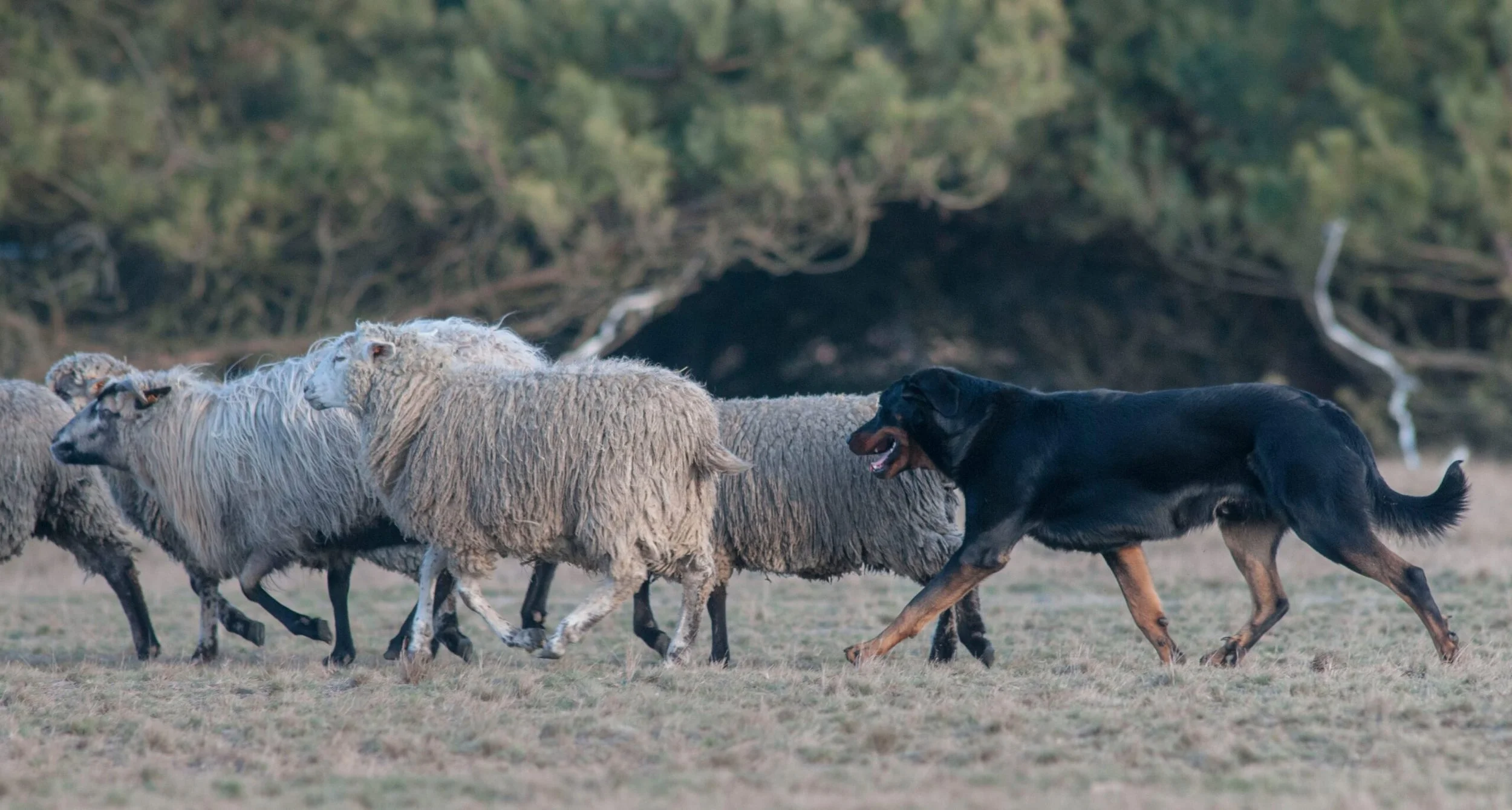
CITR CIB Polish Herding CH Jadran Astra Canina HWT IHT3 HRDIIIs